
Acknowledgements. Preface. Foreword. Section 1. Thinking Restoratively: Challenging Paradigms About What to Do When Things Go Wrong. 1. Case Study - Tristan and Jason. 2. Courage, Connectedness and Restorative work. 3. Re-Thinking the Role of Grownups When Things Go Wrong. 4. Dealing Restoratively With Tristan and Jason. 5. Different Questions, Different Outcomes. Section 2. Feeling Restoratively: A Psychological Framework for Restorative Practices. 6. Silvan Tomkins and Humans as Emotional Beings. 7. Affect - What Makes Humans Tick. 8. A Blueprint for Mentally Healthy Schools. 9. Shame and Humiliation. 10. Grasping the Nettle: Shames Difficult Demand. 11. The Compass of Shame. Section 3. Working Restoratively: Restorative Approaches for Different Ages and Situations. 12. Continuums of Responses to Disruption and Wrongdoing. 13. Positive Behaviour Correction. 14. Affective Statements and Conversations. 15. The individual Conference. 16. The Small Group Conference. 17. The Large Group Conference. 18. The Classroom Conference. 19. The Community Conference. 20. The Leaving Well Conference. 21. Better Restorative Conversations. 22. Circles for Building Community and Teaching Restorative Thinking. Section 4. Ending Restoratively: Follow Up, Accountability and Managing a Conferencing Program. 23. What Have We Agreed to Here? 24. Creating Conference Agreements. 25. Recording and Managing New Conference Agreements. 26. After the Conference: Relationship Management and Accountability. 27. How to Review Conference Agreements. 28. Keeping Colleagues in the Loop. 29. Keeping Parents in the Loop. Conclusion. Appendix. References.
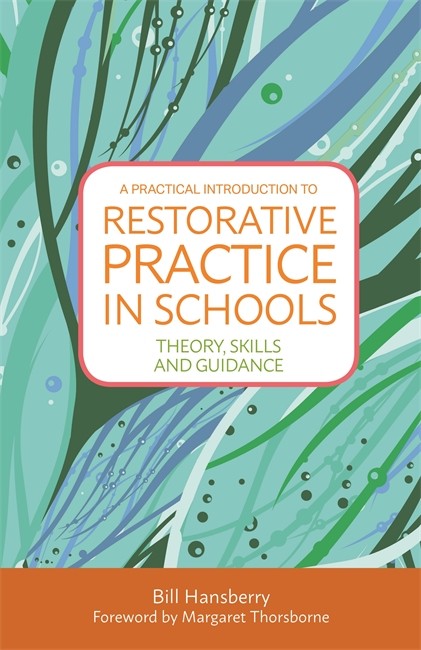

Proven to reduce bad behaviour and exclusions, and encourage happier, safer school environments, restorative justice is an effective approach to conflict resolution.
Suitable for education settings from preschool to college, this guide explains what restorative justice is, how it can be used in schools, what it looks like in the classroom and how it can be implemented. Featuring case studies that illuminate the underlying restorative principles and practices, this book covers a wide range of topics from the basics of restorative justice, through to school-wide processes for embedding the approach in policy and practice.
Drawing on the expertise of educators and consultants, this is a must-have resource for any school or centre that is serious about reducing bad behaviour and developing safer learning communities.
Bill Hansberry runs an education consultancy (www.hansberryec.com.au). Bill is widely recognised for his knowledge about behaviour management, restorative justice and cultural renewal in educational settings. He is also known for his passion for relational teaching, strategic community building and Circle Time, as well as his unique and engaging style in facilitating professional learning workshops for schools, school clusters and other organisations. Bill lives in Adelaide, Australia.