
Katrina Huels is an educational consultant who has more than twenty years of experience in special education, with expertise spanning instructional design, program leadership, and national accreditation. She has served in roles ranging from classroom teacher to senior executive, and her robust background in psychology and education informs a career grounded in evidence-based practice and systemic reform. Throughout her career, Katrina experienced firsthand both the profound rewards and the ongoing stress and fatigue that lead to burnout among educators. As she sought strategies to build internal balance, resilience, and motivation in herself and her staff members, she encountered a persistent gap in resources and a lack of systemic solutions. Drawing on the framework of emotional intelligence and the science of neuroplasticity, Katrina translates research into actionable tools tailored to high-stakes environments. This work reflects her conviction that all educators deserve strategies that allow them to thrive in their roles throughout their careers. You can find more information and contact Katrina at huelsappliedharmony.com.
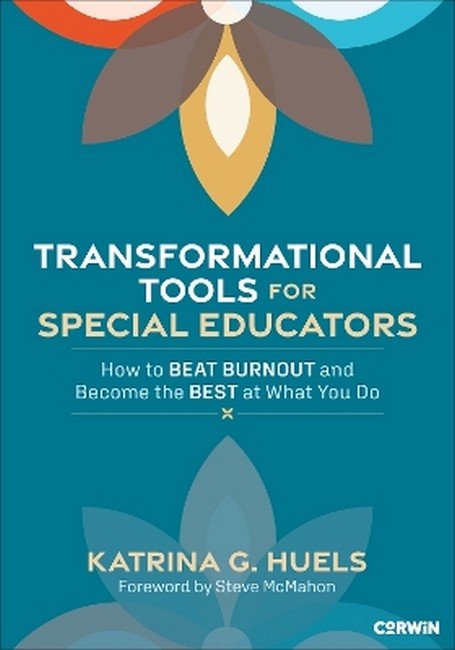

Avoid burnout and reclaim your passion Burnout has become the silent epidemic threatening the very heart of special education. People enter the field with a passion to make a difference, only to find themselves overwhelmed by endless paperwork, high-stakes meetings, behavioral crises, and the unrelenting pace of the work. While professional development addresses topics like specialized instruction, behavior management, and IEP development, a critical gap remains: training that helps special educators sustain themselves and thrive in their roles. Transformational Tools for Special Educators offers a way forward. Grounded in neurology and emotional intelligence research, this resource equips educators with practical, time-efficient strategies that fit into the realities of the school day. Inside, you'll find: Research-backed tools across the five domains of emotional intelligence Insights into how consistent use of the tools rewires the brain for better balance, resilience, and clarity Real-world scenarios reflecting the diverse roles of special education professionals Strategies designed for use individually, in professional learning communities, or across districts Whether you are new to the field or a veteran, a teacher or a paraprofessional, an administrator or a related service provider, this book helps you reclaim your energy, restore your balance, and sustain the passion that first drew you to special education.
Foreword: Steve McMahon Publisher's Acknowledgments About the Author Introduction PART 1. SETTING THE STAGE: THE CRISIS, THE SCIENCE, AND THE FRAMEWORK Chapter 1: The Burnout Crisis Scope and Impact A Path Forward Chapter 2: Emotional Intelligence and Neuroplasticity Emotional Intelligence Neuroplasticity Connecting EI and Neuroplasticity Chapter 3: Transformational Tools: Structure and Function Emotional Intelligence Domains The Neuroscience of Emotional Responses Transformative Tools: What to Expect PART 2. TRANSFORMATIVE TOOLS AND STRATEGIES Chapter 4: Developing Self-Awareness What Self-Awareness Tools Do Why Self-Awareness Tools Work Quick Summary Chapter 5: Self-Awareness Tools Reflective Journaling Body Scanning Mindfulness Gratitude Practices Expressive Writing Affect Labeling Chapter Summary Chapter 6: Developing Self-Regulation What Self-Regulation Tools Do Why Self-Regulation Tools Work Quick Summary Chapter 7: Self-Regulation Tools Breathwork Cognitive Reframing Grounding Progressive Muscle Relaxation Dialectical Behavior Therapy (DBT-Informed Strategies) Chapter Summary Chapter 8: Developing Motivation What Motivation Tools Do Why Motivation Tools Work Quick Summary Chapter 9: Motivation Tools Intrinsic Goal Setting Self-Efficacy Mindset Development Chapter Summary Chapter 10: Applied Harmony Daily Harmonizing Situational Harmonizing Quick Summary Chapter 11: External Emotional Intelligence Tools What External Emotional Intelligence Tools Do Why External Emotional Intelligence Tools Work Quick Summary Chapter 12: Empathy Tools Active Listening Perspective-Taking Nonviolent Communication (NVC) Trauma-Informed Empathy Chapter Summary Chapter 13: Social Skills Tools Conflict Resolution Strategies Structured Relationship-Building Social Awareness Development Effective Communication Chapter Summary Closing Thoughts Index