
Pedro Noguera is the Dean of the Rossier School of Education and a Distinguished Professor of Education at USC. He is one of the nation's leading scholars on issues related inequality and public policy in education. Prior to coming to USC, he held endowed chairs at UCLA, NYU, Harvard, and the University of California, Berkeley. He is the author of 15 books, hundreds of articles and editorials, and serves as an advisor to several states, school districts, foundations, NGOs, and nonprofits. Noguera has received eight honorary doctorates from American universities, and he has received several awards for his research and advocacy efforts aimed at promoting educational equity. In 2023 he was ranked 1st in the nation for influence and impact in the field of education by Education Week. He was born in New York City to Caribbean immigrants and is the father of five children and grandfather to five. Douglas Fisher is professor and chair of educational leadership at San Diego State University and a teacher leader at Health Sciences High and Middle College. Previously, Fisher was an early intervention teacher and elementary school educator. In 2022, he was inducted into the Reading Hall of Fame by the Literacy Research Association. He has published numerous articles on reading and literacy, differentiated instruction, and curriculum design, as well as books such as Your Introduction to PLC+, Welcome to Teaching, How Feedback Works, Teaching Reading, and RIGOR Unveiled. Fisher loves being an educator and hopes to share that passion with others. Nancy Frey is a professor in educational leadership at San Diego State University and a teacher leader at Health Sciences High and Middle College. Her published titles include The Courage to Learn, The Art and Science of Coaching, How Scaffolding Works, and The Illustrated Guide to Visible Learning. Frey is a credentialed special educator, reading specialist, and administrator in California and learns from teachers and students every day. Valentina Gonzalez is a former teacher who has served over 25 years in education in her own classroom, as a district facilitator for English learners, a professional development specialist for Multilingual Learners, and an educational consultant. Her work's primary focus has been on literacy, culture, and language. Valentina delivers professional development and coaches teachers of MLs to support language and literacy instruction. She is the co-author of Reading & Writing with English Learners: A Framework for K-5 and the picture book Krofne with Baba. In addition to being an author, her work has also been published in numerous journals and professional publications such as Language Magazine, Edutopia, MiddleWeb, TEPSA, Ed Week, and School Library Journal.
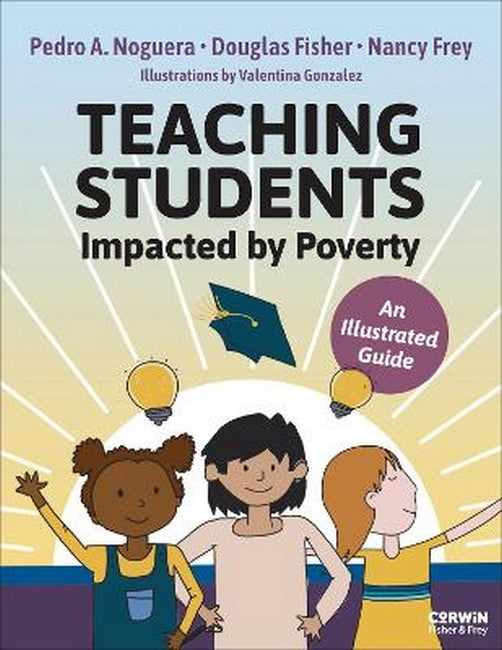

Cultivate inclusive, rigorous spaces where young people are positioned for lifelong success Many students experiencing poverty navigate systemic barriers that make academic success harder to achieve. While these out-of-school challenges can feel overwhelming, poverty should not predict learning outcomes or achievement. Rooted in the understanding that hope must be paired with action, Teaching Students Impacted by Poverty is a practical guide for dismantling these obstacles. Grounded in research and classroom experience, this accessible, illustrated resource helps educators focus on what they can control: classroom climate, instructional rigor, and the compassion needed to ensure every student experiences dignity and belonging. Inside, you'll find: Actionable strategies for chunking learning, building student agency, and intervening with empathy Practical teaching and reflection frameworks that scaffold, lift, and empower learners Spotlights on current educational research and asset-based practices rooted in evidence An easy-to-follow visual format connecting complex concepts to everyday classroom routines When educators combine high expectations with a deep understanding of their students' realities, profound academic growth follows.
Introduction Section 1: Putting a Face on Poverty Section 2: Opportunities to Learn Section 3: Anchoring Opportunity Every Day Section 4: Chunking Learning Section 5: Strengthening Students' Belief in Themselves